
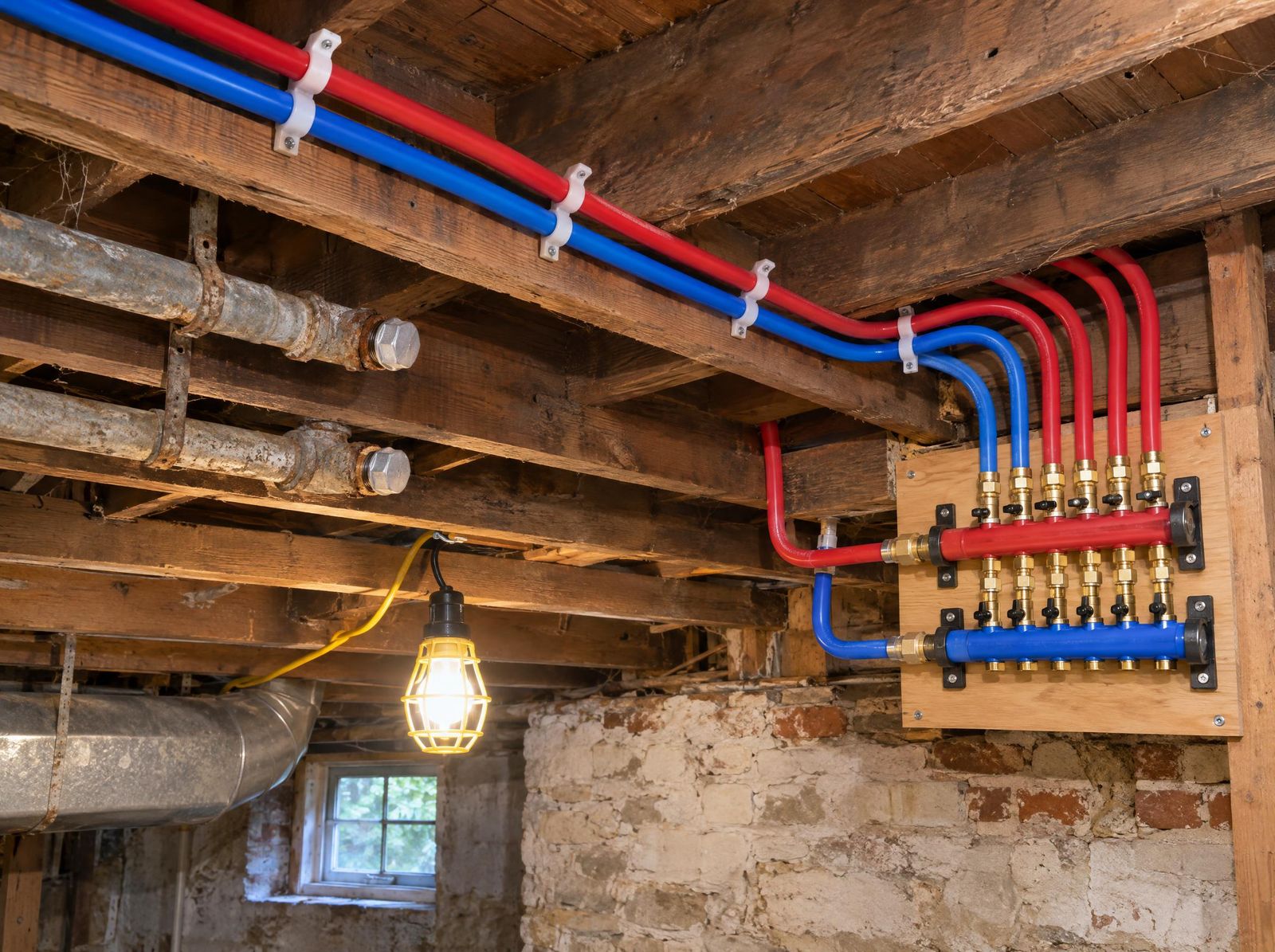
Repiping in Chesterfield, VA: galvanized supply and cast iron drains
If the upstairs shower barely runs, the water comes out rusty, or an old cast iron drain is weeping in the basement, the pipe itself is wearing out. We find which runs are failing, replace them with new supply or drain pipe, and close up the walls before we leave.
- Galvanized supply replaced
- Cast iron drains repaired or replaced
- Walls patched, dust kept down
Tell us what the pipes are doing
We usually answer the same day. Sewer backups get a call back within the hour.
Sewage coming up or water on the floor? Call or text now: 804-555-0163
What happens inside old galvanized pipe
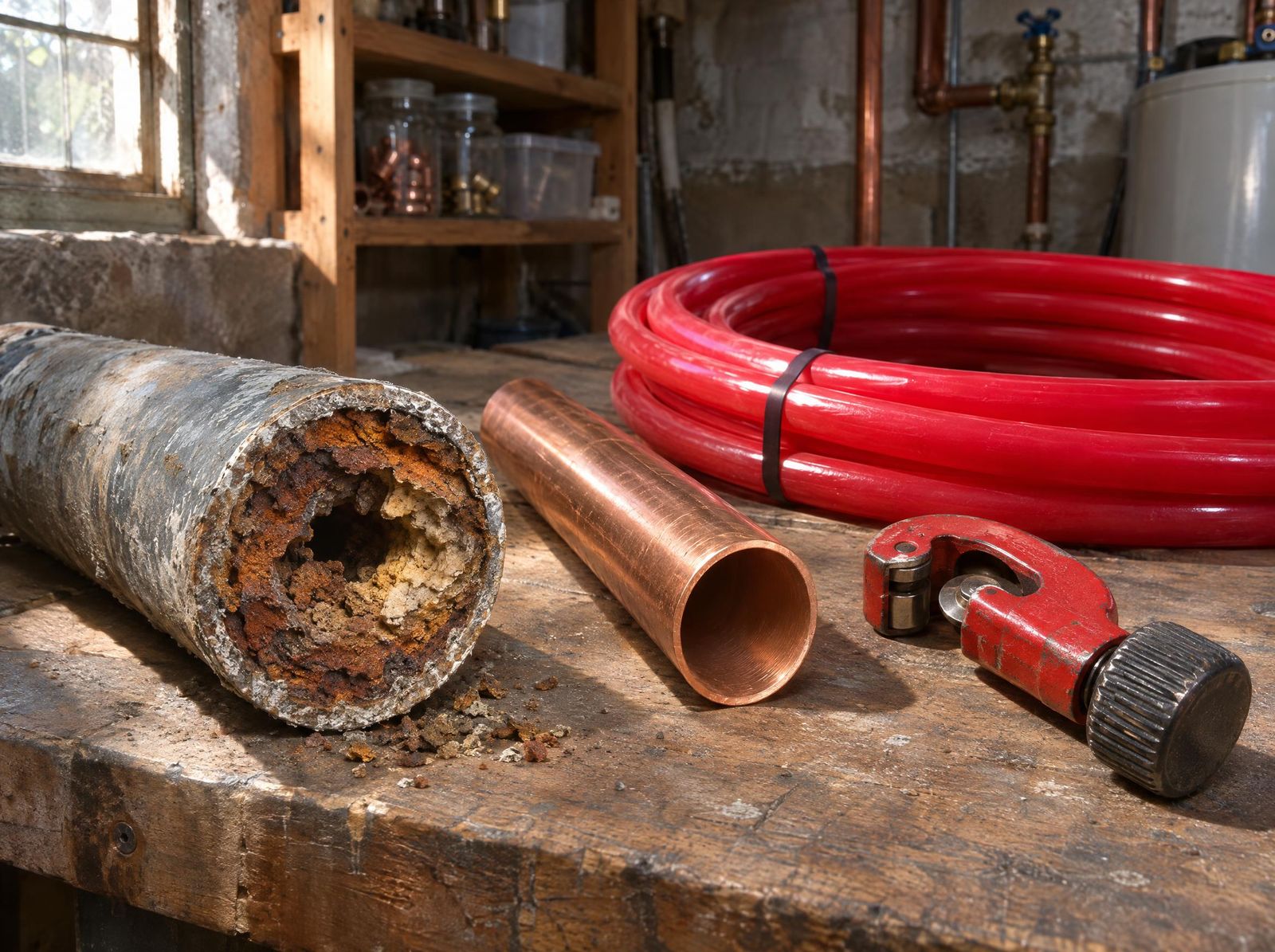
Galvanized steel was the standard water pipe in houses for much of the twentieth century. The zinc coating wears through, the steel rusts from the inside, and the opening closes up a little every year. That is why the upstairs shower is the first to go weak.
In Richmond there is a second reason to look. Under the city's Lead Free Water program, galvanized pipe that was ever downstream of a lead pipe counts as a lead service line, and lead lines are more likely in older buildings near the historic districts. The city plans to replace the lines in its control by 2037, and it asks owners to replace their own side first.
We cut a section so you can see the inside, then replace the runs that are failing with copper or PEX.
“Our 1920s house still had galvanized pipe and the upstairs shower barely ran. They repiped in three days, kept the dust down and patched every opening in the plaster before they left.”
Signs the pipe itself is wearing out
Any one of these on its own can have another cause. Two or three together usually mean old pipe.
Weak pressure upstairs
Galvanized supply narrowing from the inside.
Rusty or brown water
Especially first thing in the morning, from rusting steel pipe.
Leaks at threaded joints
The threads are the thinnest part of galvanized pipe and go first.
Weeping cast iron
Damp lines or rust stains along a basement drain, often a crack along the bottom.
Sewer smell in the basement
A cracked cast iron drain or a failed joint letting gas out.
Repairs keep stacking up
When one fix leads to the next, the run is due.
Fix the section, or repipe the run?
We look before we price. This is how it usually comes out.
| What we find | Usually | Why |
|---|---|---|
| One leaking galvanized joint, rest sound | Repair | A short section and a coupling fixes it |
| Low pressure on every floor | Repipe the supply | The whole run has narrowed |
| One cracked cast iron section | Replace that section | Sound pipe either side can stay |
| Cast iron cracking along its length | Replace the run | Patches would follow each other |
| Galvanized downstream of lead in Richmond | Replace your side | The city treats it as a lead line |
How a repipe goes
Most of the house keeps working while we do it.
Walk-through and a written contract.
Every run marked, the price and the dates signed before work.
Permit pulled.
With Chesterfield, Henrico, Hanover, Colonial Heights or the City of Richmond.
New lines in, old ones cut and capped.
Water off only while each run is tied in.
Inspection, then the walls closed.
Openings patched and the work area cleaned.
You deal with Ruth, and every run is in writing

Ruth Ellison, owner and master plumber
Ruth answers the phone, runs the camera on most sewer calls and writes the contract. You deal with her from the first call to the cleanup.
Book a repipe visit
We usually answer the same day. Sewer backups get a call back within the hour.
Sewage coming up or water on the floor? Call or text now: 804-555-0163
Repiping questions we hear most
How do I know if I have galvanized pipe?
Galvanized steel pipe is dull gray with threaded fittings. Scratch it with a key: it stays gray, where copper shows a penny color. A magnet sticks to galvanized and not to copper or plastic. Look where the water line comes into the house and at the pipes on the basement ceiling.
Does galvanized pipe count as a lead service line in Richmond?
It can. Under the City of Richmond's Lead Free Water program, galvanized pipe that was ever downstream of a lead pipe is considered a lead service line. The city publishes an inventory map at rva.gov, and the Department of Public Utilities is at 804-646-8600. The city encourages owners to replace their own side of the line first and then call DPU. See our Richmond page.
Why is my water pressure low upstairs?
In older houses the usual cause is galvanized pipe closing up from the inside with rust and scale, so less water gets through. A cut section often shows an opening a fraction of the original size. Replacing the supply runs brings the pressure back.
Do you have to tear out the walls?
We open what we need to reach the pipe and no more, usually at fixtures and where lines cross between floors. In plaster houses we cut neat openings and patch them before we leave. Furniture is covered and the dust is kept to the work area.
Can cracked cast iron drains be repaired instead of replaced?
A single cracked section or a failed joint can be cut out and replaced with new pipe and couplings. When the cast iron is scaled and cracking along its length, replacing the run is the better spend. The camera shows how far it goes.
Do I need a permit to repipe?
Yes. The Virginia Uniform Statewide Building Code requires a permit for work on the water distribution and sanitary drainage systems. We pull it with your county or the City of Richmond and book the inspection.
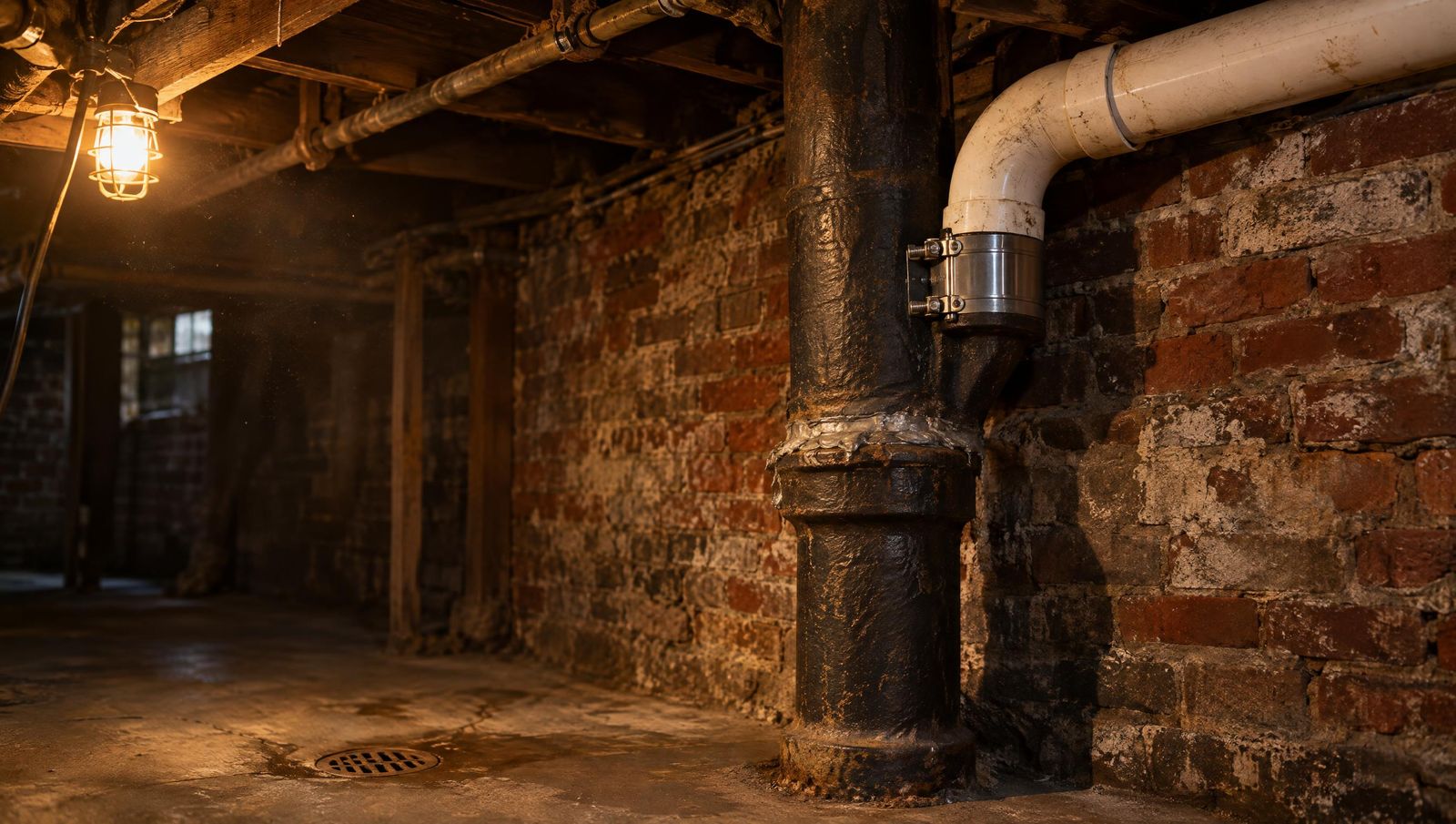
Old pipes? Tell us what the water is doing.
Tell us the age of the house, which taps are weak and whether the water is ever discolored. For a single drip, see leak repair.
Book a plumber, camera included
We usually answer the same day. Sewer backups get a call back within the hour.
Sewage coming up or water on the floor? Call or text now: 804-555-0163